



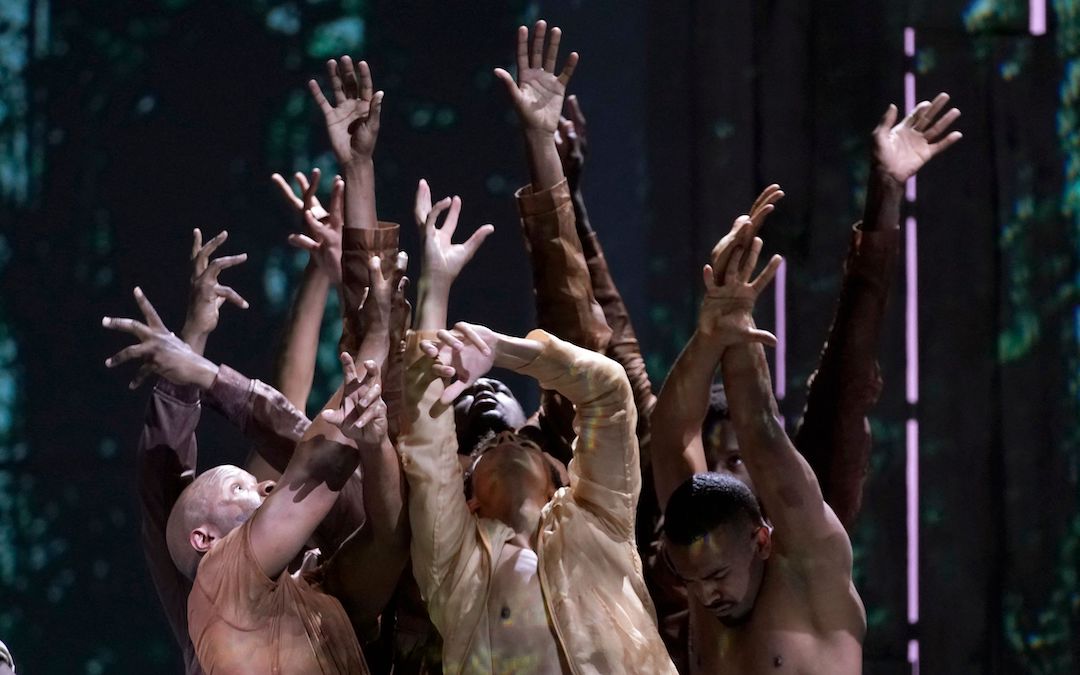
February is Black History Month, a time to focus on the culture, history, and people of the Black American movement. To celebrate, multiple studios, theater chains, and promotional companies are rolling out a number of special events throughout the month. One of them is Fathom Events, which is releasing a special encore of Fire Shut Up in My Bones, for a nationwide, one-night-only event on Saturday, February 12.
Based on the memoir of New York Times columnist Charles M. Blow, the opera is a landmark first for a number of reasons. Fire Shut Up in My Bones composer Terence Blanchard is a five-time Grammy Award-winning composer and trumpeter, as well as a two-time Oscar nominee for BlacKkKlansman and Da 5 Bloods. He’s also the first Black composer to ever have his work presented by the New York Metropolitan Opera. Likewise, Camille A. Brown, who co-directed the production with James Robinson, is the first Black director to have a mainstage production at the Met. There are a few other firsts, as well. Filmmaker Kasi Lemmons marks her first foray into opera with the libretto for Fire Shut Up in My Bones, while 13-year-old Walter Russell III makes his Met debut in the opera alongside baritone Will Liverman and sopranos Angel Blue and Latonia Moore, under Met music director Yannick Nézet-Séguin. Meanwhile, the legendary Audra McDonald, six-time Tony, Grammy, and Emmy winner, hosts the live event transmission.
Fire Shut Up in My Bones, which embraces elements of jazz, tells the story of Blow as a young man working to overcome the pain and trauma of a childhood of hardship. The title is derived from the Bible passage Jeremiah 20:9, which reads
If I say, “I will not mention him,
or speak any more in his name,”
then within me there is something like a burning fire
shut up in my bones;
I am weary with holding it in,
and I cannot.
The passage refers to the prophet Jeremiah, who is weary of the tribulations he’s endured through spreading God’s word. As the prophet appointed to reveal the sins of people and relate the punishment to come, his prophecies are rarely met with kindness. But when he resolves to no longer spread these messages, the truth of the knowledge he has regarding the sins of others burns within him and he finds he can no longer hold it in. He must speak the truth of what he knows before it burns him up inside.
It’s a poignant and apt story to describe Charles Blow’s own story told in Fire Shut Up in My Bones. As a child in rural Louisiana, he is molested by his cousin, Chester. He keeps the secret to himself for years, and every time he tries to open up, both about being molested and also about his conflicted feelings about other boys, he is rebuffed. He tries to bury the pain by running away, by throwing himself into dating, by pledging the Kappa Alpha Psi fraternity when he goes to college, but nothing can erase the shame or stop the darkness growing in his heart as he finally resolves to kill Chester for what he did all those years ago. In the end, Charles is forced to confront his younger self and he takes the first real step toward healing, finally telling his mother what Chester had done to him as a child. With the confession, he unbottles everything he’s had pent up inside, loosing the fire shut up in his bones.
The Metropolitan Opera’s performances of Fire Shut Up in My Bones received great reviews from critics upon its first run, with critics and reviewers praising the performance of the cast, Blanchard’s score, and the compassionate way in which he told Charles’ story. New York Observer opera critic James Jorden has even claimed that Fire Shut Up in My Bones is “in the running for best American opera of the 21st century.” Whether one is a lover of opera, jazz, or Black history, this special event encore presentation is not to be missed.
Get tickets for Fire Shut Up in My Bones.


